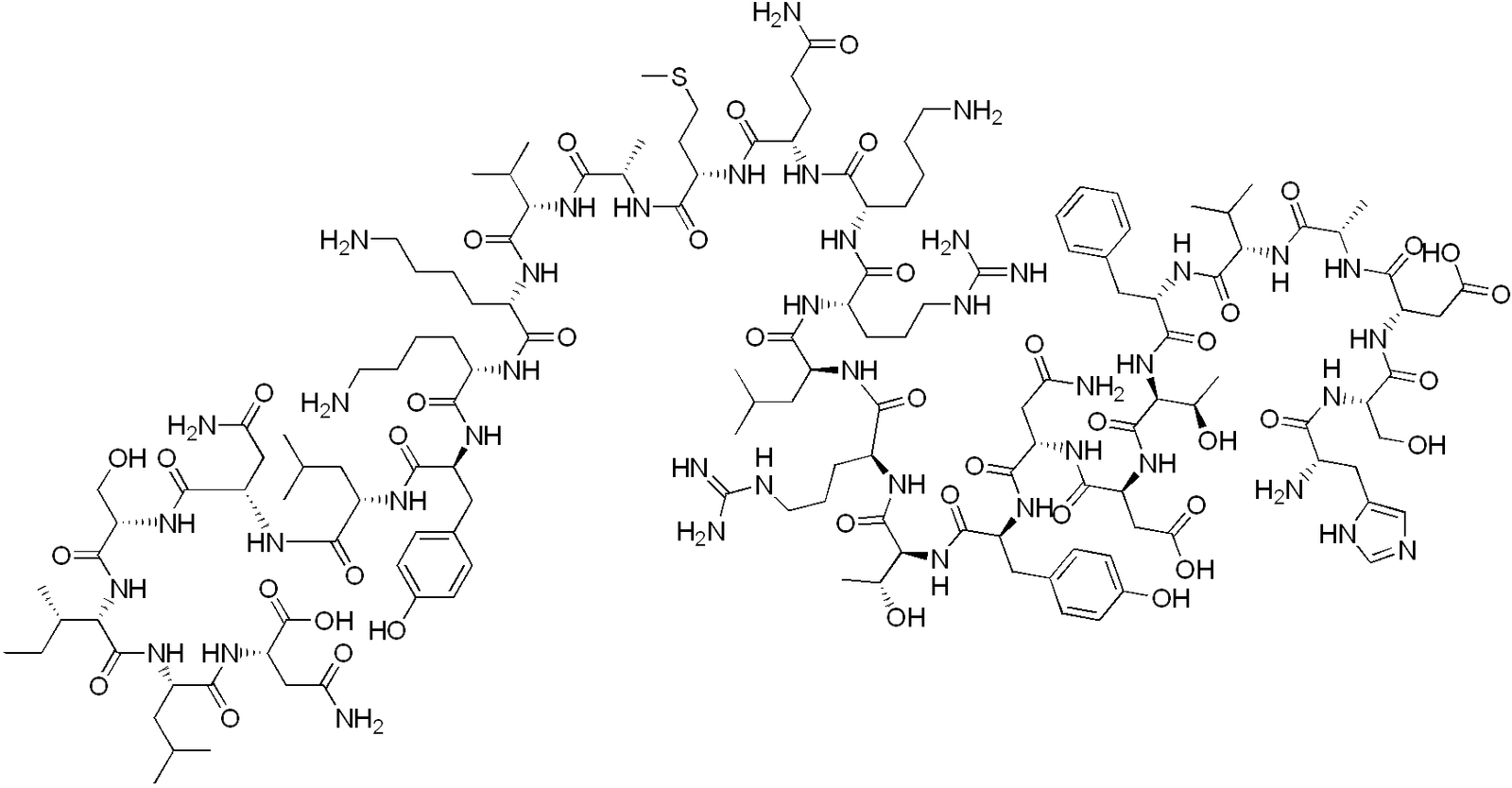
BPC-157 (Body Protection Compound 157) is a synthetic 15-amino-acid peptide based on a protein fragment isolated from human gastric juice, studied for tissue repair; its strongest evidence comes from animal and cell studies. [USADA] [Józwiak 2025]
BPC-157 is not approved by the FDA or any other health authority for any use, and it is prohibited in sport under WADA class S0 (non-approved substances) [USADA]. The published human data consist of three small, uncontrolled pilot studies [McGuire 2025], all from the same lead author, with 2, 12 and 16 participants. No randomized controlled trial has reported results, and a 2025 systematic review found no clinical safety data [Vasireddi 2025].
| Item | Status |
|---|---|
| US FDA status | Not approved for any use [FDA] |
| Compounding (503A/503B) | Withdrawn from Category 2 by nominators; not on the 503A Bulks List; July 2026 advisory vote non-binding [FDA PCAC] |
| WADA 2026 | Prohibited, S0 non-approved substances [USADA] |
| Australia (TGA) | Schedule 4 (prescription-only) with Appendix D controls, from 1 June 2024 [TGA] |
| Strongest evidence | Animal (rats); human data are uncontrolled case series (n=2 to 16) |
| Human trials | 4 registered on ClinicalTrials.gov: NCT02637284, NCT07752381, NCT07437547, NCT07803250; none has posted results |
| Last checked | 2026-09-29 |
Key points:
- FDA staff concluded that evidence was lacking for BPC-157 as a treatment for ulcerative colitis [FDA briefing]; its advisory committee then voted 8–6, with one abstention, in favor of listing it for compounding (trade-press report).
- In rats and dogs, the intact peptide has an elimination half-life under 30 minutes [He 2022].
- The FDA flags immunogenicity and peptide-related impurities as risks and says it lacks information on whether BPC-157 harms humans [FDA].
- Two placebo-controlled trials, in hamstring strain and after rotator cuff repair, are recruiting or not yet open [NCT07437547] [NCT07803250].
BPC-157 identity
| Property | Value |
|---|---|
| Sequence | Gly-Glu-Pro-Pro-Pro-Gly-Lys-Pro-Ala-Asp-Asp-Ala-Gly-Leu-Val (15 amino acids) [PubChem] |
| Molecular formula | C62H98N16O22 [PubChem] |
| Molecular weight | 1419.5 g/mol [PubChem] |
| CAS number | 137525-51-0 [PubChem] |
| PubChem CID | 9941957 |
| Other names | PL 14736, PL-10, bepecin, PLD-116 [PubChem] |
| Half-life | Under 30 minutes in rats and dogs [He 2022] |
| Routes studied | Intraperitoneal, oral, intramuscular, intravenous (animals); intra-articular, intravesical, intravenous, subcutaneous, oral (humans) |
| Class | Synthetic gastric pentadecapeptide; tissue repair peptide |
What is BPC-157?
BPC-157 is a pentadecapeptide, meaning a chain of 15 amino acids. It was derived from a larger “body protection compound” isolated from human gastric juice [Józwiak 2025], and its developers call it a “stable gastric pentadecapeptide” [Seiwerth 2021]. Under the code name PL 14736 it was developed as an anti-ulcer and bowel-healing drug candidate, and the developers’ 2012 review refers to a phase II trial in inflammatory bowel disease [Sikiric 2012]. No registry entry or full peer-reviewed report of that trial was found in PubMed or ClinicalTrials.gov as of 2026-09-29. Of 36 orthopaedic studies in a 2025 systematic review, 35 were preclinical [Vasireddi 2025].
How does BPC-157 work?
How BPC-157 might work has been studied only in cells and animals. The proposed mechanisms are:
- Tendon cell migration: in rat tendon fibroblasts, BPC-157 increased cell outgrowth, survival under oxidative stress and migration, with dose-dependent increases in the signaling proteins FAK and paxillin [Chang 2011]. Evidence: Lab (in vitro).
- Growth hormone receptor: in rat tendon fibroblasts, BPC-157 raised growth hormone receptor expression, and adding growth hormone then increased cell proliferation through JAK2 signaling [Chang 2014]. Evidence: Lab (in vitro).
- New blood vessel formation (angiogenesis): BPC-157 raised vessel density in chick embryo membranes, sped blood-flow recovery in rat limb ischemia and activated the VEGFR2-Akt-eNOS pathway in human endothelial cells [Hsieh 2017]. Evidence: Animal and Lab.
- Nitric oxide system: in rats, BPC-157 normalized nitric oxide and malondialdehyde (an oxidative-stress marker) levels after venous occlusion [Amic 2018]. Evidence: Animal.
What the research shows
Each claim commonly made about BPC-157 is listed below with the best available evidence and its level.
| Claim | Evidence level | Best study and result |
|---|---|---|
| Speeds tendon healing | Animal | Staresinic 2003: in rats with cut Achilles tendons, higher load to failure and better histology |
| Stimulates tendon cells | Lab (in vitro) | Chang 2011: more outgrowth, survival and migration of rat fibroblasts |
| Promotes blood vessel growth | Animal, Lab | Hsieh 2017: faster blood-flow recovery in rat limb ischemia |
| Reduces colitis damage | Animal | Veljaca 1995: dose-dependent reduction of chemically induced colon damage in rats |
| Protects gut and liver from NSAIDs | Animal | Ilic 2011: counteracted diclofenac-induced gut and liver lesions in rats |
| Heals skin wounds and burns | Animal | Seiwerth 2021: review of rodent wound, burn and ulcer models |
| Relieves knee pain | Human (case series, n=16) | Lee 2021: 14 of 16 reported relief; retrospective, no control group |
| Relieves interstitial cystitis | Human (case series, n=12) | Lee 2024: all 12 women self-rated 80–100% success; no control group |
| Treats ulcerative colitis in people | No published human trial | FDA 2026: staff found evidence of effectiveness lacking |
| Safe in humans | Human (case series, n=2) | Lee 2025: no adverse effects in 2 adults over 2 days; not evidence of safety |
Tendon, ligament and muscle
In rats with a cut Achilles tendon, daily intraperitoneal (into the abdominal cavity) BPC-157 improved load to failure and increased fibroblast formation and collagen deposition compared with saline [Staresinic 2003] (Animal). A 2025 systematic review of orthopaedic uses screened 544 articles and included 36 studies; 35 were preclinical and one was clinical [Vasireddi 2025]. The review found improved outcomes in animal muscle, tendon, ligament and bone injury models. A 2026 primer for sports medicine physicians called these findings “largely unvalidated in human trials” [Mayfield 2026].
Gut and bowel
The gut is where BPC-157 research started. In rats, it reduced chemically induced colon damage in a dose-dependent way [Veljaca 1995], healed cysteamine-induced colitis and colon anastomoses (surgical joins) [Klicek 2013], and counteracted gut and liver lesions caused by the painkiller diclofenac [Ilic 2011] (all Animal). Ulcerative colitis was the use the FDA’s compounding committee reviewed in July 2026. FDA staff found the evidence insufficient and noted that approved drugs already treat the condition [FDA briefing].
Pain and other uses in people
The only published human outcome data are the two case series in the table above, both published in the same journal by the same lead author [Lee 2021] [Lee 2024]. Neither had a control group, so neither can separate the effect of BPC-157 from placebo, natural recovery or other treatment. A 2025 scoping review counted three human pilot studies in total and concluded that BPC-157 should be “considered investigational” [McGuire 2025].
Human studies and trials
No completed randomized controlled trial of BPC-157 has published results. The published studies and registered trials are listed below.
| Study | Design and n | Status and result |
|---|---|---|
| Lee 2021, knee pain | Retrospective chart review, intra-articular, n=16 (12 BPC-157 alone, 4 with thymosin beta-4) | Published; 11 of 12 on BPC-157 alone and 14 of 16 overall reported relief |
| Lee 2024, interstitial cystitis | Uncontrolled pilot, bladder-wall injection, n=12 women | Published; 10 rated success 100%, 2 rated 80%; no adverse events reported |
| Lee 2025, IV safety | Uncontrolled pilot, intravenous, n=2 | Published; no changes in heart, liver, kidney, thyroid or glucose markers |
| NCT02637284 | Phase 1, randomized, placebo-controlled, oral tablets, healthy volunteers, n=42 (planned) | Status unknown; last updated December 2015; no results posted |
| NCT07752381 | Single-arm, oral gummy supplement, n=40 | Completed November 2025; no results posted |
| NCT07437547 | Phase 2, randomized, double-blind, placebo-controlled, subcutaneous, acute hamstring strain, n=120 (planned), China | Recruiting; primary completion estimated February 2027 |
| NCT07803250 | Phase 1 pilot, randomized, placebo-controlled, subcutaneous, after rotator cuff repair, n=30 (planned), US | Not yet recruiting; start estimated January 2027 |
Doses used in studies
The table records amounts reported in published studies and trial registrations. It describes research designs, not guidance.
| Route and species | Amount | Study |
|---|---|---|
| Intraperitoneal, rat | 10 µg/kg, 10 ng/kg or 10 pg/kg once daily | Staresinic 2003 |
| Intraperitoneal or oral, rat | 10 µg/kg or 10 ng/kg | Ilic 2011 |
| Intraperitoneal, rat | 0.0001 to 10 nmol/kg | Veljaca 1995 |
| Repeated-dose toxicity, dog | Up to 2 mg/kg | Xu 2020 |
| Intravesical, human (n=12) | 10 mg total, single procedure | Lee 2024 |
| Intravenous, human (n=2) | 10 mg (day 1), 20 mg (day 2) | Lee 2025 |
| Oral tablet, human (registered) | 1 mg per tablet | NCT02637284 |
No established human dose exists outside approved labels.
Side effects and safety
Reported adverse effects. The three human pilot studies reported no adverse events [Lee 2024] [Lee 2025] (Human, case series, n=2 to 16). Studies this small and this short cannot detect uncommon or delayed harms, and a 2025 systematic review found no clinical safety data [Vasireddi 2025].
Animal toxicology. In a preclinical safety program in mice, rats, rabbits and dogs, single doses produced no test-related effects. Dogs tolerated repeated dosing apart from a fall in creatinine at 2 mg/kg that resolved after dosing stopped. Local irritation was mild, and no genetic or embryo-fetal toxicity was found [Xu 2020] (Animal).
Theoretical risks. Because BPC-157 promotes blood vessel growth through VEGFR2 in lab and animal models [Hsieh 2017], reviewers have raised the possibility of pathological angiogenesis and a cancer-promoting effect [Moiz 2026]. This risk has not been tested in humans. The FDA lists a risk of immunogenicity (an immune reaction against the peptide) for some routes [FDA].
Product quality. According to the FDA, BPC-157 may carry peptide-related impurities and problems with characterizing the active ingredient [FDA]. A 2026 review lists contamination, manufacturing impurities and inaccurate dosing as risks of unregulated injectable peptides, along with cardiovascular stress [Moiz 2026].
Who regulators caution. No approved label exists, so there are no labeled contraindications. The FDA says it “lacks sufficient information to know whether the drug would cause harm when administered to humans” [FDA]. USADA warns athletes that BPC-157 is a prohibited, experimental substance [USADA]. Because no clinical safety data exist [Vasireddi 2025], there is no human evidence for pregnancy, children or people with cancer.
Legal and regulatory status
| Jurisdiction | Status | Source (checked) |
|---|---|---|
| US, FDA approval | Not approved for any indication | FDA (2026-09-29) |
| US, 503A compounding | Withdrawn from Category 2 by nominators; not on the 503A Bulks List; not Category 1 | FDA (2026-09-29) |
| Sport, WADA 2026 | Prohibited, S0 non-approved substances | USADA, WADA (2026-09-29) |
| Australia, TGA | Schedule 4 with Appendix D, from 1 June 2024 | TGA |
The FDA’s 503A categories are interim: Category 1 substances may be eligible for the 503A Bulks List, Category 2 substances raise “significant safety risks relating to the use of these substances in compounding,” and Category 3 substances were nominated with insufficient information for evaluation [FDA]. BPC-157 was previously in Category 2. The FDA page, updated 2026-04-22, now lists it among substances nominated but withdrawn [FDA]. Withdrawal does not place it in Category 1.
Dated events:
- 2024-06-01: BPC-157 entered Australia’s Poisons Standard as a Schedule 4 substance with Appendix D possession controls [TGA].
- 2026-04-22: the FDA Category 2 page listed BPC-157 as withdrawn by its nominators [FDA].
- 2026-07-23: the FDA Pharmacy Compounding Advisory Committee reviewed BPC-157 free base and acetate for ulcerative colitis for the 503A Bulks List [FDA PCAC]. FDA staff recommended against inclusion [FDA briefing]. The committee voted 8–6 with one abstention in favor, as reported by the trade press (RAPS, 2026-07-23); FDA had not posted minutes by 2026-09-29. The vote is advisory, and any listing requires FDA rulemaking.
Related peptides
TB-500, a fragment of thymosin beta-4, is the peptide most often discussed alongside BPC-157 and was combined with it in part of the 2021 knee-pain series [Lee 2021]. KPV, an anti-inflammatory tripeptide, was reviewed at the same July 2026 FDA committee meeting [FDA PCAC].
Frequently asked questions
Is BPC-157 FDA approved?
No. BPC-157 is not approved by the FDA for any use, and USADA notes that no health authority anywhere has approved it for human clinical use. The FDA says it lacks sufficient information to know whether BPC-157 would cause harm in humans [FDA]. The July 2026 advisory vote did not change this.
Can pharmacies compound BPC-157 after the 2026 vote?
The advisory committee’s July 2026 vote in favor is not binding. BPC-157 is not on the 503A Bulks List, and its withdrawal from Category 2 did not place it in Category 1 [FDA]. Adding it to the list would require FDA rulemaking. No rule had been proposed as of 2026-09-29.
Is BPC-157 banned in sports?
Yes. BPC-157 is prohibited under WADA’s S0 class of non-approved substances [USADA]. That class covers substances not approved for human clinical use by any health authority, which is BPC-157’s position. USADA describes it as an experimental peptide that creates risk for athletes subject to anti-doping rules.
Has BPC-157 been tested in humans?
Only in small uncontrolled studies. Three published pilot studies included 2, 12 and 16 people, and none had a placebo group [McGuire 2025]. A placebo-controlled phase 2 trial in hamstring strain is recruiting 120 participants and expects primary completion in February 2027 [NCT07437547].
What are the side effects of BPC-157?
No adverse events were reported in the three small human pilot studies, but those studies were too small and short to establish safety [Vasireddi 2025]. Theoretical concerns include unwanted blood vessel growth and immune reactions. Unregulated products add risks of impurities, contamination and inaccurate content [Moiz 2026].
References
- US Food and Drug Administration. Certain bulk drug substances for use in compounding that may present significant safety risks (updated 2026-04-22). fda.gov
- US Food and Drug Administration. Bulk drug substances used in compounding under section 503A of the FD&C Act (updated 2026-05-14). fda.gov
- US Food and Drug Administration. July 23-24, 2026: Meeting of the Pharmacy Compounding Advisory Committee. fda.gov
- US Food and Drug Administration. FDA Briefing Document for BPC-157-Related Bulk Drug Substances, PCAC, July 2026. fda.gov
- US Anti-Doping Agency. BPC-157: Experimental peptide creates risk for athletes. usada.org
- World Anti-Doping Agency. Prohibited List. wada-ama.org
- Therapeutic Goods Administration. Notice of final decision to amend (or not amend) the current Poisons Standard: ACMS #43, ACCS #37, Joint ACMS-ACCS #35. tga.gov.au
- National Center for Biotechnology Information. PubChem Compound Summary, CID 9941957 (BPC-157). pubchem.ncbi.nlm.nih.gov
- He L, Feng D, Guo H, et al. 2022. Pharmacokinetics, distribution, metabolism, and excretion of body-protective compound 157, a potential drug for treating various wounds, in rats and dogs. Front Pharmacol. PubMed 36588717
- Xu C, Sun L, Ren F, et al. 2020. Preclinical safety evaluation of body protective compound-157, a potential drug for treating various wounds. Regul Toxicol Pharmacol. PubMed 32334036
- Staresinic M, Sebecic B, Patrlj L, et al. 2003. Gastric pentadecapeptide BPC 157 accelerates healing of transected rat Achilles tendon and in vitro stimulates tendocytes growth. J Orthop Res. PubMed 14554208
- Chang CH, Tsai WC, Lin MS, Hsu YH, Pang JH. 2011. The promoting effect of pentadecapeptide BPC 157 on tendon healing involves tendon outgrowth, cell survival, and cell migration. J Appl Physiol. PubMed 21030672
- Chang CH, Tsai WC, Hsu YH, Pang JH. 2014. Pentadecapeptide BPC 157 enhances the growth hormone receptor expression in tendon fibroblasts. Molecules. PubMed 25415472
- Hsieh MJ, Liu HT, Wang CN, et al. 2017. Therapeutic potential of pro-angiogenic BPC157 is associated with VEGFR2 activation and up-regulation. J Mol Med (Berl). PubMed 27847966
- Amic F, Drmic D, Bilic Z, et al. 2018. Bypassing major venous occlusion and duodenal lesions in rats, and therapy with the stable gastric pentadecapeptide BPC 157, L-NAME and L-arginine. World J Gastroenterol. PubMed 30598581
- Veljaca M, Lesch CA, Pllana R, et al. 1995. BPC-15 reduces trinitrobenzene sulfonic acid-induced colonic damage in rats. J Pharmacol Exp Ther. PubMed 7815358
- Klicek R, Kolenc D, Suran J, et al. 2013. Stable gastric pentadecapeptide BPC 157 heals cysteamine-colitis and colon-colon-anastomosis and counteracts cuprizone brain injuries and motor disability. J Physiol Pharmacol. PubMed 24304574
- Ilic S, Drmic D, Franjic S, et al. 2011. Pentadecapeptide BPC 157 and its effects on a NSAID toxicity model: diclofenac-induced gastrointestinal, liver, and encephalopathy lesions. Life Sci. PubMed 21295044
- Seiwerth S, Milavic M, Vukojevic J, et al. 2021. Stable gastric pentadecapeptide BPC 157 and wound healing. Front Pharmacol. PubMed 34267654
- Sikiric P, Seiwerth S, Rucman R, et al. 2012. Focus on ulcerative colitis: stable gastric pentadecapeptide BPC 157. Curr Med Chem. PubMed 22300085
- Lee E, Padgett B. 2021. Intra-articular injection of BPC 157 for multiple types of knee pain. Altern Ther Health Med. PubMed 34324435
- Lee E, Walker C, Ayadi B. 2024. Effect of BPC-157 on symptoms in patients with interstitial cystitis: a pilot study. Altern Ther Health Med. PubMed 39325560
- Lee E, Burgess K. 2025. Safety of intravenous infusion of BPC157 in humans: a pilot study. Altern Ther Health Med. PubMed 40131143
- Vasireddi N, Hahamyan H, Salata MJ, et al. 2025. Emerging use of BPC-157 in orthopaedic sports medicine: a systematic review. HSS J. PubMed 40756949
- McGuire FP, Martinez R, Lenz A, Skinner L, Cushman DM. 2025. Regeneration or risk? A narrative review of BPC-157 for musculoskeletal healing. Curr Rev Musculoskelet Med. PubMed 40789979
- Józwiak M, Bauer M, Kamysz W, Kleczkowska P. 2025. Multifunctionality and possible medical application of the BPC 157 peptide: literature and patent review. Pharmaceuticals (Basel). PubMed 40005999
- Moiz A, O’Keefe EL, O’Keefe JH. 2026. Dangers of injectable peptides and other unregulated “biohacking” drugs. Mo Med. PubMed 42757290
- Mayfield CK, Bolia IK, Feingold CL, et al. 2026. Injectable peptide therapy: a primer for orthopaedic and sports medicine physicians. Am J Sports Med. DOI 10.1177/03635465251357593
- ClinicalTrials.gov. NCT02637284, NCT07752381, NCT07437547, NCT07803250 (accessed 2026-09-29).
Change log
2026-09-29: first published.